News
THEMIS makes 60,000 orbits of Red Planet
Friday, June 19, 2015
Long-running NASA Mars Odyssey orbiter has carried THEMIS for 14 years and nearly a billion miles.
Mars 'wet streaks' are dry, says THEMIS data
Tuesday, September 6, 2016
Seasonal dark streaks on Martian hillsides, long thought to hold flowing water, contain less water than the driest deserts on Earth.
THEMIS helps NASA choose site for next Mars lander
Thursday, March 5, 2015
THEMIS infrared images mapped dust and rocks for NASA's upcoming InSight lander.
Zoom around Gale Crater using your web browser
Monday, August 6, 2012
Explore Gale Crater, landing site for NASA's new Mars rover Curiosity, using your browser!
THEMIS data suggest early Gale Crater targets for rover
Thursday, August 2, 2012
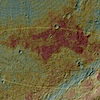
THEMIS data covering Gale Crater point to hardened sediments near an alluvial fan that will likely become an early target for NASA's Curiosity rover.
THEMIS celebrates a decade's discoveries
Tuesday, February 28, 2012
In the last decade, the THEMIS camera has circled Mars nearly 45,000 times and taken more than half a million images.
In memory: Planetary geologist Ronald Greeley
Friday, October 28, 2011

Ronald Greeley, a Regents' Professor of Planetary Geology at ASU who contributed significantly to our understanding of the solar system, died October 27, in Tempe.
THEMIS keeps an eye on Mars for dust
Tuesday, January 11, 2011
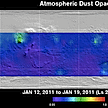
Scientists are using THEMIS to detect seasonal and yearly changes in dust activity and to track the development of dust storms.
THEMIS: All-Star images
Thursday, December 9, 2010
THEMIS presents a hit parade slide show of images, as NASA's Mars Odyssey orbiter becomes the longest-duration Mars spacecraft.
Putting the spin on Mars
Wednesday, November 10, 2010
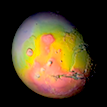
Wrapping spacecraft data onto Mars globes gives new perspectives on the Red Planet.
THEMIS camera yields best Mars map ever
Friday, July 23, 2010
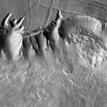
The best Mars map ever assembled is now online for planetary scientists and armchair astronauts alike — and citizen scientists are invited to help make it even better.
iPhone app delivers daily THEMIS Mars images
Friday, June 18, 2010
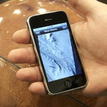
A free iPhone app delivers THEMIS Images of the Day to your device.
Middle school students find cave on Mars
Thursday, June 17, 2010
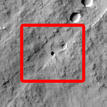
Using THEMIS, middle-school science students discover what may be a hole in the roof of a lava tube cave on Mars.
Updated THEMIS mosaics of MSL landing site candidates
Friday, March 26, 2010
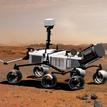
New data from THEMIS is helping scientists choose a landing site for the Mars Science Laboratory (MSL), NASA's next-generation rover spacecraft, due for launch in 2011.
New orbit gives THEMIS better looks at Mars minerals
Monday, June 15, 2009
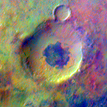
Moving NASA's Mars Odyssey to a different orbit has increased the sensitivity and efficiency of THEMIS.
THEMIS lets you find your place on Mars
Tuesday, April 21, 2009
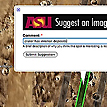
A new feature in Google Earth 5.0 lets anyone, anywhere suggest places on Mars for THEMIS to photograph.
Sideways look from THEMIS probes Mars atmosphere
Thursday, May 29, 2008
.png?1389202090)
On May 25, 2008, the Phoenix lander arrived at Mars and raced to a safe touchdown on the northern plains. At the same time, NASA's Mars Odyssey orbiter turned its radio antenna to listen for signals from the spacecraft and relayed them to mission controllers on Earth.
THEMIS helps Phoenix land safely on mars
Wednesday, May 21, 2008
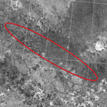
ASU's Thermal Emission Imaging System helped scientists find a safe landing site for the Mars Phoenix spacecraft - and the instrument is also giving flight controllers essential data on the atmosphere to ensure a safe touchdown.
Salt deposits found in Martian highlands
Wednesday, March 19, 2008
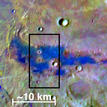
Deposits of chloride (salt) minerals found on Mars using THEMIS may provide evidence for the existence of former Martian life.
Mars image milestone for THEMIS web site
Thursday, May 3, 2007
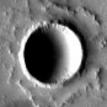
Lava flows and wind streaks mingle with impact craters in the 1,200th THEMIS Image of the Day.
