THEMIS Fact Sheet
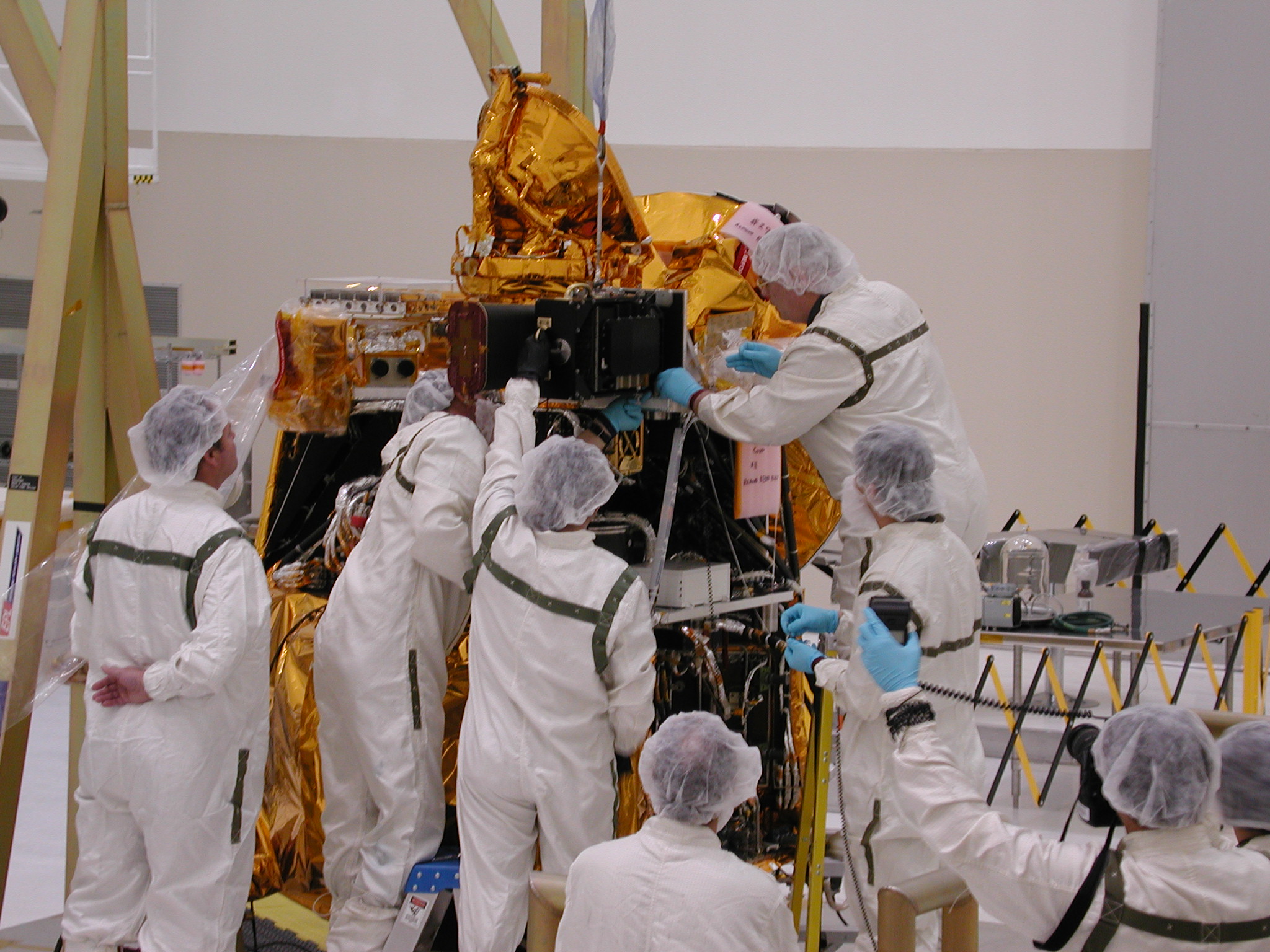
The Thermal Emission Imaging System (THEMIS) is a special camera on the Mars Odyssey spacecraft. Its main tasks are mapping rock mineralogies and detecting heat, which yields information on the physical and thermal properties of the martian surface.
THEMIS is a multi-wavelength camera
5 visual bands:
0.425 microns, 0.540 microns, 0.654 microns, 0.749 microns, 0.860 microns
10 infrared bands:
6.78 microns (used twice), 7.93 microns, 8.56 microns, 9.35 microns,10.21 microns, 11.04 microns, 11.79 microns, 12.57 microns, 14.88 microns
Resolution:
visual images, 59 feet (18 meters) per pixel
infrared images, 328 feet (100 meters) per pixel
Chief Science Goals
Look for rocks altered by water
Study geologic details on Mars
Hunt for "hot spots" indicating underground hydrothermal systems
Principal Investigator
Philip Christensen, Arizona State University
More details on THEMIS (1.1MB PDF)
Mars Odyssey Mission Fact Sheet
Launched: April 7, 2001, from Kennedy Space Center, Florida
Cruise to Mars: about 200 days
Mars arrival: October 24, 2001
Aerobraking: completed January 2002
Science mapping: began February 18, 2002
Spacecraft mass (fueled): 1,671 pounds (758 kilograms)
Main instruments:
Thermal Emission Imaging System (THEMIS)
Gamma-ray Spectrometer (GRS)
Mars Radiation Environment Experiment (MARIE)
Mars Odyssey site at Jet Propulsion Laboratory
News

Friday, June 19

Tuesday, September 6

Thursday, March 5

Monday, August 6


